Rules-Based Order Advocates Destabilizing Africa With Regime Change of Eritrea-Trump Beware!

Eritrea’s strategic location in the Horn of Africa (courtesy of dehai.org)

January 12, 2025

The following article, Eritrea Is the North Korea of Africa: America Must Act, is a naked call for regime-change against the nation of Eritrea. The author advocates for the incoming administration of President Trump, to support so called democracy movements to overthrow the government of President Isaias Afwerki. If the Trump administration were to follow this perilously foolish advice, it could result in igniting a catastrophic destabilization of the Horn of Africa that would affect the entire continent. Potentially hundreds of thousands of Africans could die from military combat, starvation, and disease, with even more Africans becoming refugees. This is a dangerous trap being set for President Trump, which he must reject. If he does not, the people of the most populous continent will hate him, and U.S.-African relations will be severely damaged for decades.

With this essay, Michael Rubin is exposing himself as a reckless fool, and the American Enterprise Institute (AEI), as a treacherous ally of the incoming administration, threatening the stability of East Africa. Both Rubin and AEI reveal themselves as tools of the West’s rules-based order.

Reject Madness

Look at a map! Look at the nations contiguous to Eritrea and its neighbors in the East African region. Hundreds of millions of Africans could be affected by such an irresponsible action as regime-change.

Sudan-48 million people, is experiencing a horrible internal war, threatening to destroy the nation of Sudan, sending millions of Sudanese fleeing into neighboring nations. Ethiopia-125 million people, after surviving a two year war that killed hundreds of thousands of Ethiopians (2020-2022) is suffering internal strife as the government continues to battle ethnic-nationalists over the last two years. South Sudan-11 million people, has been virtually a failed state since its independence in 2011. Somalia-18 million people, the government is struggling to achieve stability, battling al Shabaab for nearly two decades. Kenya with 55 million people, Uganda with a population of 46 million, and Djibouti with one million, would not be immune from an externally motivated removal of President Afwerki. It is sheer madness for Rubin and AEI to encourage regime-change in such a turbulent region. Either Rubin and AEI have no understanding of the dynamics of this region, and/or they are completely oblivious regarding the ill-fated consequences their proposal for U.S. sponsored regime change.

Eritrea’s coastline that borders the Gulf of Aden and the Red Sea, is a strategic trade route, which the rules-based order wants under the control of a more pliable leader than President Afwerki, who is deemed too independent.

President of Eritrea, Isaias Afwerki (courtesy of shabait.com)

The article is filled with assertions and only one sighted source, Eritrea’s ambassador to South Sudan. Comparisons are made to Zimbabwe, which was also a target of failed attempts at regime-change; North Korea, one of the nations listed in the “axis of evil”; and Saddam Hussein, whose nation was invaded by the West, which led to the creation ISIS. Of course, Russia and China are not left out of Rubin’s diatribe. Although Eritrea has been subject to various sanctions over the decades, Rubin and AEI advocate additional sanctions, empowering  and funding opposition groups for the removal of Eritrea’s President.

Rubin encourages pressuring allies of Eritrea, and invites the involvement of the National Endowment of Democracy, notorious for instigating regime-change across the globe, and judged by many to be an asset of the CIA. Rubin writes:

The State Department should make clear to the United Arab Emirates that it should cease its partnership with Africa’s most destabilizing state, one which is increasingly a partner for China. It might also convene, perhaps in conjunction with the National Endowment for Democracy, a “Future of Eritrea” project to identify and assess the areas of greatest need upon Isaias’ exit.

Human Development, Not Rules

It should be clear to any honest observer that overthrowing the government of Eritrea is not in the interests of Eritreans, nor the over three hundred million Africans living in East Africa-one third of the continent’s population. To deliberately inflict such harm and hardship on an African population that is already suffering from extreme poverty, is evil.

Eritrea’s President Isaias Afwerki, left, and Ethiopia’s Prime Minister Abiy Ahmed talk during the inauguration of the Tibebe Ghion Specialized Hospital in Bahir Dar, northern Ethiopia, Nov. 10, 2018. (courtesy of voanews.com)

The core of the problem with Rubin and AEI, is their perverted worldview. More accurately, their demented belief structure, which is anti-human. Their diseased ideology views the world as composed of zero-sum relationships in a static universe. Only winners and losers, or victors, and victims exist according to this worldview. Or, as the saying goes, “you are either with us or against us.” Neither human beings, nor the physical universe, are organized in this fixed structure. Rather, it is change, transformation, development, negative entropy, and human creativity, which actually governs the human race and our universe. The ideological obsession of the rules-based order mind-set, which steers the actions of both U.S. political parties, and the self-destructed Biden administration, is the real danger to the wellbeing of the people of our planet. Not Afwerki, Mugabe, Hussein, China, Russia, and North Korea.

If we know, as we readily should: human beings are the only species endowed with the power of creative mentation, and nations are composed exclusively of humans. Thus, it is elementary that all foreign policy should be governed by the principle of development for the human race, not the so called rule of order dictated by Western institutions. U.S. policy has been driven by the insistence of imposing its so called rules and structures of democracy on the Global South. Ignoring that the most important principle is the promotion of life, which necessitates economic growth. When other nations, such as China, form a bond with African nations grounded in economic development, they are attacked by the rules based order and labeled a dangerous enemy. Chinese President, Xi Jinping, has been vilified, for among other strategies, his 2013 initiation of the Belt and Road Initiative and continuation of the successful, Forum on China-Africa Cooperation.

In the last six decades, only U.S. President John Kennedy has shown a genuine concern for collaborating with African leaders to promote economic development.

Rather than initiating programs and visions to foster economic growth in the Horn of Africa, as I have for the last decade, U.S. governments had fueled the flames of conflict. Most egregiously: 1) the Biden administration’s de facto support for the Tigrayan army’s attempt to militarily remove Prime Minister Abiy Ahmed from his elected leadership of Ethiopia; 2) Biden’s refusal to support the most important project for economic growth in East Africa, the Grand Ethiopian Renaissance Dam.

Victims of regime-change. Libya President, Umar al Qaddafi and Iraqi President, Saddam Hussein. (courtesy googlenews.com)

Not to be out done by Biden, the adherents to the rules-based order are proposing that the new Trump administration, should ignite the Horn of Africa, with U.S. support for Eritrea regime-change. How will that help Africans living in that region? It will not! Did the U.S. supported regime-change and assassination of President Gaddafi help the people of Libya and North Africa? Did the overthrow and murder of Saddam Hussein help the Iraqi people and the Middle East?

President-elect Trump has said that he rejects unnecessary foreign interventions by the U.S. If so, he should dismiss this murderously insane scheme, and work with me to bring peace and prosperity to the region through economic integration of the Horn of Africa.

As is the case with other African nations, I do not support all of Eritrea’s policies. However, thoughtful people of good will, should be able to understand the extreme harm that regime-change against the current Eritrean government would cause on the African continent. We should act, free from prejudice and the colonial past, to recognize the evil of the rules-based order, and unequivocally defend Eritrea from their assault on Africa..

Dr. Michael Rubin, Eritrea Is the North Korea of Africa: America Must Act,

Below, you can read my earlier posts on this topic:

Lawrence Freeman: Why The “Rules-Based International Order” Has Failed and Will Always Fail: The Case of Africa

US-West Rules Based Order In Denial Regarding BRICS & Africa

Lawrence Freeman is a Political-Economic Analyst for Africa, who has been involved in economic development policies for Africa for 35 years. He is a teacher, writer, public speaker, and consultant on Africa. Mr. Freeman strongly believes that economic development is an essential human right. He is the creator of the blog:   lawrencefreemanafricaandtheworld.com, and also publishing on: lawrencefreeman.substack.com, “Freeman’s Africa and the World
In 2025, Somalia & Ethiopia Must Move Forward With Economic Integration

American Analyst Says Ethiopia Can Spearhead Economic Integration in East Africa


January 6, 2025

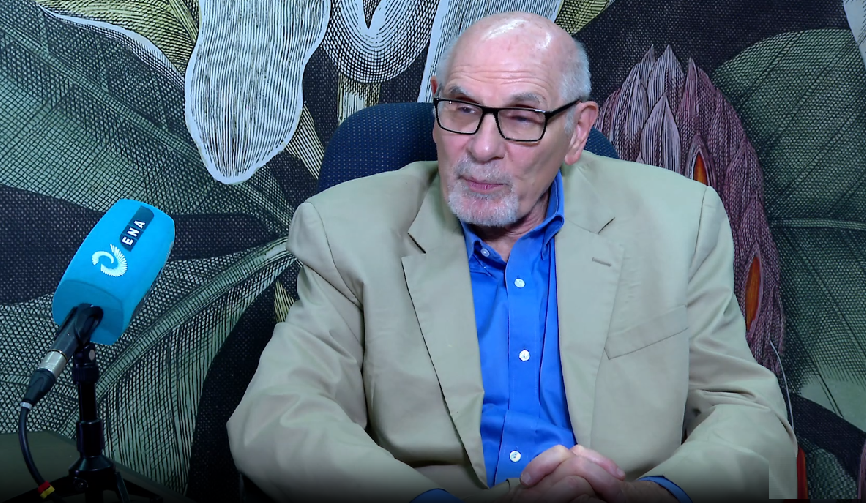
Addis Ababa January 3, 2025, interview by Ethiopian News Agency with Lawrence Freeman

Ethiopia can spearhead regional economic integration in East Africa by leveraging its growing economy and focusing on poverty reduction, the American political and economic analyst Laurence Freeman told ENA.

With about 120 million people, Ethiopia has the potential to use its economic growth to spread integration to the rest of the region and raise the standard of living in neighboring countries, he added.

In this regard, the progress Ethiopia and Somalia made recently should be elevated to a higher level of regional economic integration to improve the lives of the people in these countries and the region, Freeman stated.

Following the Ankara agreement, the two East African nations have been improving their partnership through discussion between high level officials of the countries and exchange of visits.

According to the analyst, the developments in Ethio-Somalia relations, including high-level meetings and diplomatic exchanges, have significantly reduced the risk of conflict, which some external actors had been actively trying to instigate.

“The progress that has been made over the last few months is very important. I think it has to be developed even further. For most of 2024, there were many political actors and countries involved in trying to instigate a military conflict between Ethiopia and Somalia.”

Fortunately, the leaders of the two countries agreed to resolve the misunderstanding peacefully and the Ankara agreement was realized.

“So I’m hopeful that all these latest developments will put to rest the idea that the two neighboring nations should go to war. I think for the moment, the forces of peace have the upper hand.”

The American analyst noted that Ethiopia has been providing security in Somalia for many years both as part of the African Union force and in the other way to support the fight against Al Shabab.

As “Ethiopians are very well organized army, Somalia has relied on the Ethiopian military forces against the fight of violent extremism. This process should continue and now there are efforts that are being discussed.

But prior to the recent agreements between the leaders of Somalia and Ethiopia there were people calling for the removal of Ethiopia troops from the AU force. This would have been a mistake,” he revealed.

Freeman further stressed the need to prioritize economic integration across the region, encompassing Somalia, Djibouti, Ethiopia, Kenya, and other East African nations.

“Now we have to move to a higher level, and that level means we have to achieve economic integration in the entire region. And this means that these nations should be working together to promote economic growth. The most important issue is raising the standard of living of people living in poverty in these regions.”

Read my earlier post: Live in the Future to Foster Regional Integration With Ethiopia in the Horn of Africa

Lawrence Freeman is a Political-Economic Analyst for Africa, who has been involved in economic development policies for Africa for 35 years. He is a teacher, writer, public speaker, and consultant on Africa. Mr. Freeman strongly believes that economic development is an essential human right. He is the creator of the blog:   lawrencefreemanafricaandtheworld.com, and also publishing on: lawrencefreeman.substack.com, “Freeman’s Africa and the World

Live in the Future to Foster Regional Integration With Ethiopia in the Horn of Africa

WATCH Interview with OBN Horn of Africa, January 10, 2024

January 16, 2024

Let us work to make the Horn of Africa and East Africa a model of regional economic integration. This process has already begun, with the Grand Ethiopian Renaissance Dam exporting electricity to Sudan, Kenya, and Djibouti. Ethiopia having long term port access to major shipping routes through the Gulf of Eden and the Red Sea, will expand Ethiopia’s economy and has the potential to develop the regional economy of East Africa. There are three primary conceptual obstacles that people have in understanding how to develop this region, which I discuss above in the video interview with OBN, and below in the written interview with ENA.

One, the majority of people do not understand the physical scientific principles to economic development, having been miseducated by our schools and society.

Two, the legacy of colonialism has perverted the thinking process of many Africans, leading to fixed prejudices that prevent one from seeing what is possible.

Three, most people live in the past, or at best in the present. I try to live in the future, where my mind can see the fruitful potential of that which we humans can create but does not yet exist.

Ethiopia-Somaliland MoU Model for Economic Development of Africa: American Analyst

Interview with Ethiopian News Agency, January 2, 2024

Addis Ababa, January 4/2024(ENA)- The current MoU signed by Ethiopia and Somaliland could become a model for economic development of the continent, Political-economic analyst for Africa Lawrence Freeman said.

In an exclusive interview with ENA, the analyst said that the Memorandum of Understanding signed on Monday could be a “useful example for the rest of the African continent.”

Moreover, the MoU for Partnership and Cooperation inked by Prime Minister Abiy Ahmed and President Muse Bihi Abdi includes wide scopes of cooperation in social, economic, political, and military fields.

It is also intended to serve as a framework for the multisectoral partnership between the two sides, and shall pave the way to realize the aspiration of Ethiopia to secure access to the sea and diversify its access to seaports.

In this respect, Freeman believes the agreement is a breakthrough that could accelerate regional and global trade.

“If you look at it optimistically, the situation in the Horn of Africa could actually become a model for economic development and in the whole African continent. Now, this is what we’re looking for, regional integration, economic-regional linkage into international trade among nations, instead of exporting everything outside the nation. So this could be a useful example for the rest of the continent.”

However, there are political forces within the Horn of Africa and around the world who would like to continue destabilizing the region, the American analyst noted.

He particularly pointed out that there are manipulators and political forces screaming war constantly.

When the prime minister talked about the port in October 2023, dozens of articles were published predicting war. But, there was no indication of war, he stated.

According to Freeman, the historic MoU was signed in a peaceful manner and has the potential to bring other countries to cooperate with Ethiopia in this geopolitically strategic part of the world.

He advised specifically Somalis to refrain from inflammatory statements and resolve the issue calmly.

Given the conflict between Somalia and Somaliland for many years, Somaliland has been conducting its affairs differently in the spheres of currency, economy, governance and others.

The MoU “can offer economic growth to actually both nations because if Somaliland is growing, Somalia is growing too…. Statements like ‘we’re not going to give one inch of our territory’ is the kind of talking that is not helpful. We’re going to have to move forward. We can’t stay the way we are. We need to have a resolution between those two between Somalia and Somaliland.”

Beyond that the problems in the Horn of Africa are very complicated and emanate from a whole bunch of leftover problems from the days of colonialism, he noted.

There is a lot of antagonism and complications that come from colonial history.

“As for the amount of anger and hatred that I see from people against one country versus another, we’re not going to give up. We’re not going to let them know that you’re stuck in the mind of the old colonists picture. My message to people is to move forward,” the analyst underscored.

For Freeman those people who are screaming about war are either fools or they’re being manipulated by other forces in the wrong way.

In general, the American analyst stated that the MoU is very important for Ethiopia to realize the advancement of import-export trade and allow the nation to have greater access to the rest of the world.

Ethiopia also being the largest economy and population, the area can make perfect sense to build a naval capacity it once had when it accessed the Red Sea, he added.

More importantly, Ethiopia is also now going to play a major role as the country has become a new member of the BRICS, the leading institution of the global South, with a new paradigm for development of emerging nations.

That gives Ethiopia a great deal of an opportunity to begin to deal with all the political-economic frailties and create a new level of regional cooperation in the region.

Read my earlier posts:

Ethiopia Access to Seaports Benefits All People of East Africa

Economic Development Can Bring Peace to the Horn of Africa

Lawrence Freeman is a Political-Economic Analyst for Africa, who has been involved in economic development policies for Africa for over 30 years. He is a teacher, writer, public speaker, and consultant on Africa. Mr. Freeman strongly believes that economic development is an essential human right. He is also the creator of the blog:  lawrencefreemanafricaandtheworld.com

“Ethiopian Seaport is Win-Win for East African Nations”: Physical Economic Analyst Freeman

November 19, 2023

In my interview above with OBN (11/6/2023), I discuss the importance of understanding the concept of physical economy to competently analyze the future of the Horn of Africa. Sadly, the vast majority of Africans, like Americans, do not chose to look into the future. It is only by knowing what physical economic inputs are necessary to sustain an expanding population 20-40 years into the future that one can determine the best policies of their nation in the present. Claims of “my nation first” or “my ethnicity first,” express a short sighted mentality that is detrimental to the interests of the nations of the region. Full economic integration of the Horn of Africa, driven by investments in infrastructure, is the most reliable path to achieving peace, stability, and economic growth, and avoiding conflict.

Read my comments in the Ethiopian Herald: Why Ethiopia CDjian No Longer Ignore Interests On the Red Sea – allAfrica.com

Read my earlier posts:

Ethiopia Access to Seaports Benefits All People of East Africa

Economic Development Can Bring Peace to the Horn of Africa

Lawrence Freeman is a Political-Economic Analyst for Africa, who has been involved in economic development policies for Africa for over 30 years. He is a teacher, writer, public speaker, and consultant on Africa. Mr. Freeman strongly believes that economic development is an essential human right. He is also the creator of the blog:  lawrencefreemanafricaandtheworld.com

Ethiopia Must Exert Its National Sovereignty From U.S. Sanctions

February 21, 2022

Watch my video above.

Perhaps, it is fitting that on the U.S. holiday–“Presidents Day”–that I, as an American, should be demanding that my President, Joe Biden, stop threatening Ethiopia with more sanctions. Geopolitical doctrine requires U.S. control of the vitally important water way along the East Coast of Africa. U.S. geopolitics cannot allow strategy for the Horn of Africa to be decided by independent minded African leaders such as Prime Minister Abiy Ahmed, and Eritrea President, Isaias Afwerki. President Biden and the U.S. State Department under Antony Blinken will demand concessions from PM Abiy as they talk of resuming a cooperative relationship between the U.S. and Ethiopia. At the same time, they will allow the US Congress to threaten Ethiopia with more disgusting sanctions in HR6600, if Ethiopia does not make concessions. It is known as the “soft cop-hard cop” approach. Ethiopia should exercise its sovereignty and chart a path for the development of its nation. The operation of the first turbine of the GERD producing 375 megawatts of electricity, portends the right direction.

Review news coverage below

Lawrence Freeman is a Political-Economic Analyst for Africa, who has been involved in economic development policies for Africa for over 30 years. He is the creator of the blog: lawrencefreemanafricaandtheworld.com. Mr. Freeman’s stated personal mission is; to eliminate poverty and hunger in Africa by applying the scientific economic principles of Alexander Hamilton.

Hunger Stalks Africa: Nations Should be Food Self-Sufficient

Desert Locust invade Ethiopia (Courtesy TESFANEWS)

February 27, 2020

Right now, as I write, two regions of Africa are experiencing food emergencies: East Africa and Southern Africa. This is a crime against humanity. There is no objective reason for starvation and malnutrition in this continent rich with arable land. Actions should be taken today, not tomorrow, to reverse this life threatening, but preventable food shortage. It is morally repugnant to witness so many human beings perishing due to the persistence of poverty, hunger, and disease in Africa.

On January 20th, the United Nations Food and Agriculture Organization (FAO) requested a mere $76 million to combat the spread of the destructive Desert Locusts.  A just released joint statement-UN Joint Statement on Locust in East Africa signed by several organizations, Locust in Africa: A Race Against Time, reports that since February, the locust swarms originally sighted in Ethiopia, Kenya, Somalia, have spread to South Sudan, Djibouti, Uganda, Tanzania,  and have reached the eastern border of the Democratic Republic of the Congo, which has not since a locust incursion since 1944.  With the expansion of the locust invasion, the FAO has doubled its request for emergency funding to $138 million, of which only $33 million, less than 25% has been collected of pledged.

In this region of the world the food supply is already so fragile that 20 million Africans are deemed food insecure. Experts estimate that a one square kilometer swarm of Desert Locusts can consume as much food as 35,000 people in one day, which potentially increases the number of food insecure Africans in this zone to almost 40 million.

The joint communique boldly states: “The next wave of locusts could devastate East Africa’s most important crop of the year, right when it is most vulnerable. But that doesn’t have to happen. The Window of opportunity is still open. The time to act is now.”

The statement concludes: “It is time for the international community to act more decisively. The math is clear, as is our moral obligation. Pay a little now, or pay a lot more late.”

Read: UN Joint Statement on Locust in East Africa

Read my recent post: End Threat of Locust Plague: Transform the Desert


Village women receive aid from a charity organisation in Chirumhanzi, Zimbabwe, File picture: Tsvangirayi Mukwazhi/AP

Southern Africa

Simultaneously, on the Southern end of the Africa continent; Zimbabwe, Zambia, Angola, Lesotho, and Eswanti (Swaziland) are also facing shortages of food.

Journalist, Shannon Ebrahim, reports that “according the World Food Program (WFP), 7.7 million Zimbabweans are facing the worst hunger emergency in a decade…An astounding 90% of infants are malnourished and have stunted growth.” However, severe food shortages are not limited to Zimbabwe

“In Angola, 2.4 million are affected by food insecurity, where children are barely eating one meal a day. World Vision staff in Angola report they have never seen hunger and malnutrition on this scale.

“In Zambia, 2.3 million are facing acute hunger, and in Eswatini 24% of the population are suffering food shortages. In Lesotho, 20% of the population is food insecure

WFP regional director for southern Africa Lola Castro has said, “The hunger crisis is on a scale we’ve never seen before and evidence shows it’s going to get worse.”

Ebrahim writes, “As a result of drought, widespread flooding, and economic problems, 45 million people in southern Africa are facing food shortages.”

Hunger Can Be Eliminated

Droughts, locusts, and other disasters that contribute to food insecurity may not easily be prevented, but human intervention can mitigate and surmount so called natural catastrophes. However, there is no justifiable reason for hunger to persist in a continent of abundant, fertile, arable land.

Food self-sufficiency, which is a national security priority, in this age of out sized and exaggerated globalization, has worsened in the majority of African nations over the last several decades.  Not only does this jeopardize the health and existence of society, but it drains nation’s foreign reserves with mega-food import expenditures.

The most critical, essential, fundamental, and undeniable ingredient to a successful agricultural sector, as well as a manufacturing sector, is infrastructure.  It is the sine qua non for progress. Africa is suffering from a lack of infrastructure, particularly in the most crucial categories of hard infrastructure; electrical power and railroads. No concerned official in Africa or from a friendly government, who does not place their emphasis on energy and rail, is not helping African nations to develop. No NGO activist, no matter how sincere, who does not advocate for such infrastructure is not truly helping Africans to free themselves from the shackles of poverty, hunger, and disease.

I do not make these statements lightly. Without massive construction of hard infrastructure, African nations will not have productive agricultural and manufacturing sectors capable of producing the physical goods necessary for society’s continued existence. This is a scientific-economic reality.

Why are trees being cut down across the Sahel? To provide firewood and charcoal for cooking. This is foolishness. Trees are one of the best means to reverse the march of the desert. However, trees are being cut down, because homes do not have access to electricity and gas. If a portion of the tens of billions of dollars being spent on “global warming” were spent providing electricity to the nations of the Sahel, the counterproductive practice of charcoaling would be eliminated. If we built the decades’ overdue East West railroad, along with irrigating the desert (again energy) we could, can, transform the desert.

Why should over 100 million Africans face food insecurity on this rich African continent? The truth is; there is no acceptable reason. Our own lack of action speaks volumes.

Read: Zimbabwe is Facing Starvation

Read my article below from March 22, 2017 

Famine in Africa: More Than Humanitarian Aid Required