Grand Renaissance Dam: A great Achievement for Ethiopia, Africa, and the Global South

Watch my full interview form the Grand Ethiopian Renaissance Dam: Ethiopians changing the physical universe for the benefit of humanity.

September 11, 2025

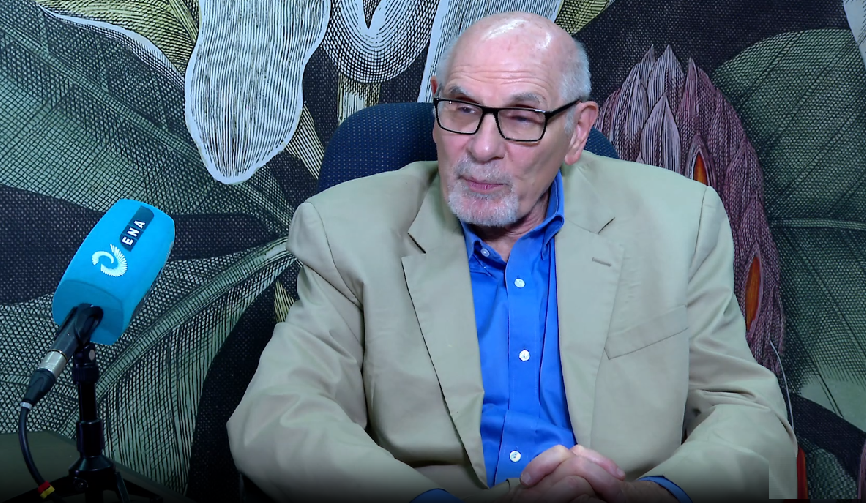
This interview below was conducted by Ethiopian News Agency-ENA in May of this year when I visited the Grand Ethiopian Renaissance Dam

US Analyst Says GERD Inauguration Marks a Major Injection of Energy for Africa

Addis Ababa, September 9, 2025 (ENA) — Ethiopia has set an excellent example for the rest of the African continent through the Grand Ethiopian Renaissance Dam (GERD), a new benchmark for regional integration, an internationally respected American analyst, Lawrence Freeman, said.

The dam, with a 5,150 megawatt of hydroelectric power to the East African nation, was inaugurated on Tuesday in the presence of leaders from Africa and the Caribbean.

Freeman, who has visited the Grand Renaissance Dam, had an exclusive interview with ENA at the site of the dam, Guba, Benishangul region of Ethiopia.

For the U.S. analyst, Ethiopia has accomplished a “great feat’ in building this hydroelectric dam.

According to him, the Grand Ethiopian Renaissance Dam has several implications for Africa.

He elaborated that the dam, in particular, will help the entire Horn of Africa, and actually East Africa, benefit from adequate electricity.

Currently, Ethiopia is supplying electricity to Djibouti, to Kenya, to Sudan, and is planning to soon supply electricity to Tanzania.

“ So the economic integration has already begun. Now, from my standpoint, as a physical economist, we need a lot more energy for Ethiopia for Africa, but this (GERD) is the biggest injection of energy onto the continent.”

And it also now places Ethiopia as the second largest producer of energy in Sub-Saharan Africa,” Freeman underscored.

According to the analyst, Ethiopia has created a great model for African countries to follow. By building up its energy supply, Ethiopia is working to improve its citizens’ standard of living, grow its manufacturing and irrigation sectors, and reduce poverty. The rest of the continent should look to Ethiopia as an example.

“We need every African country to follow the model of Ethiopia and build an energy supply that can raise the standard of living of the people, increase the manufacturing sector, increase irrigation, and eliminate poverty. So, Ethiopia has set an excellent example for the rest of the continent.”

He finally urged African countries as well as Westerners to visit the GERD and witness what has been accomplished. He added that this achievement should serve as an example for others to follow.

“I feel privileged that I can visit it twice, and other nations and other people in the region, and some of the Westerners who are not really up to snuff about what’s going on in Africa, everybody should come and visit the GERD and see for themselves what has been accomplished. And then that should be emulated,” he stated

Read below my earlier posts on the GERD.

A New African Model for Self Development: The “Grand Ethiopian Renaissance Dam” Rises Up From The Blue Nile

Lawrence Freeman is a Political-Economic Analyst for Africa, who has been involved in economic development policies for Africa for 35 years. He is a teacher, writer, public speaker, consultant on Africa, and an analyst of global strategic relations. Mr. Freeman strongly believes that economic development is an essential human right. He is the creator of the blog: lawrencefreemanafricaandtheworld.com, also publishes on: lawrencefreeman.substack.com, “Freeman’s Africa and the World, and on X @lkfreemansafrica
In 2025, Somalia & Ethiopia Must Move Forward With Economic Integration

American Analyst Says Ethiopia Can Spearhead Economic Integration in East Africa


January 6, 2025

Addis Ababa January 3, 2025, interview by Ethiopian News Agency with Lawrence Freeman

Ethiopia can spearhead regional economic integration in East Africa by leveraging its growing economy and focusing on poverty reduction, the American political and economic analyst Laurence Freeman told ENA.

With about 120 million people, Ethiopia has the potential to use its economic growth to spread integration to the rest of the region and raise the standard of living in neighboring countries, he added.

In this regard, the progress Ethiopia and Somalia made recently should be elevated to a higher level of regional economic integration to improve the lives of the people in these countries and the region, Freeman stated.

Following the Ankara agreement, the two East African nations have been improving their partnership through discussion between high level officials of the countries and exchange of visits.

According to the analyst, the developments in Ethio-Somalia relations, including high-level meetings and diplomatic exchanges, have significantly reduced the risk of conflict, which some external actors had been actively trying to instigate.

“The progress that has been made over the last few months is very important. I think it has to be developed even further. For most of 2024, there were many political actors and countries involved in trying to instigate a military conflict between Ethiopia and Somalia.”

Fortunately, the leaders of the two countries agreed to resolve the misunderstanding peacefully and the Ankara agreement was realized.

“So I’m hopeful that all these latest developments will put to rest the idea that the two neighboring nations should go to war. I think for the moment, the forces of peace have the upper hand.”

The American analyst noted that Ethiopia has been providing security in Somalia for many years both as part of the African Union force and in the other way to support the fight against Al Shabab.

As “Ethiopians are very well organized army, Somalia has relied on the Ethiopian military forces against the fight of violent extremism. This process should continue and now there are efforts that are being discussed.

But prior to the recent agreements between the leaders of Somalia and Ethiopia there were people calling for the removal of Ethiopia troops from the AU force. This would have been a mistake,” he revealed.

Freeman further stressed the need to prioritize economic integration across the region, encompassing Somalia, Djibouti, Ethiopia, Kenya, and other East African nations.

“Now we have to move to a higher level, and that level means we have to achieve economic integration in the entire region. And this means that these nations should be working together to promote economic growth. The most important issue is raising the standard of living of people living in poverty in these regions.”

Read my earlier post: Live in the Future to Foster Regional Integration With Ethiopia in the Horn of Africa

Lawrence Freeman is a Political-Economic Analyst for Africa, who has been involved in economic development policies for Africa for 35 years. He is a teacher, writer, public speaker, and consultant on Africa. Mr. Freeman strongly believes that economic development is an essential human right. He is the creator of the blog:   lawrencefreemanafricaandtheworld.com, and also publishing on: lawrencefreeman.substack.com, “Freeman’s Africa and the World

“Ethiopian Seaport is Win-Win for East African Nations”: Physical Economic Analyst Freeman

November 19, 2023

In my interview above with OBN (11/6/2023), I discuss the importance of understanding the concept of physical economy to competently analyze the future of the Horn of Africa. Sadly, the vast majority of Africans, like Americans, do not chose to look into the future. It is only by knowing what physical economic inputs are necessary to sustain an expanding population 20-40 years into the future that one can determine the best policies of their nation in the present. Claims of “my nation first” or “my ethnicity first,” express a short sighted mentality that is detrimental to the interests of the nations of the region. Full economic integration of the Horn of Africa, driven by investments in infrastructure, is the most reliable path to achieving peace, stability, and economic growth, and avoiding conflict.

Read my comments in the Ethiopian Herald: Why Ethiopia CDjian No Longer Ignore Interests On the Red Sea – allAfrica.com

Read my earlier posts:

Ethiopia Access to Seaports Benefits All People of East Africa

Economic Development Can Bring Peace to the Horn of Africa

Lawrence Freeman is a Political-Economic Analyst for Africa, who has been involved in economic development policies for Africa for over 30 years. He is a teacher, writer, public speaker, and consultant on Africa. Mr. Freeman strongly believes that economic development is an essential human right. He is also the creator of the blog:  lawrencefreemanafricaandtheworld.com

Ethiopian PM Abiy Ahmed: “Africa’s Peace and Prosperity Begin at Home”-More is Required

Th AfCFTA is intended to be a new platform for the continent’s economic growth. (courtesy twnafrica.org)

September 14, 2020

Ethiopian Prime Minister, Abiy Ahmed make a strong case for African nations to chart a course to bring prosperity to to the continent. However, much more is needed to plan for the creation of economic growth that Africa requires today and for its future population. Poverty for hundreds of millions of Africans must be eradicated. Over 600 million Africans without access to online electricity must be brought into the “light.” This requires that African leaders, with the African Union and Africa’s true allies should come together and produce a development program. A plan of action for a 5-10-20 year growth policy that must include minimally: electrifying the continent with a thousand gigawatts of electricity; high speed modern trains connecting the major cities and ports; modern all weather highways; creating a healthy manufacturing sector; and a state of the art health infrastructure system. We must think boldly about the the basic requirements needed for all Africans to live meaningful and productive lives.

Excerpt from Prime Minister Abiy

“ADDIS ABABA – Africans must take responsibility for our continent’s affairs. We have all the ingredients we need to succeed, starting with a growing population – including a large and increasingly educated cohort of young people – and a favorable trade and investment environment. And now, determined to usher in an era of African peace and prosperity, we have a mature institutional platform through which to forge, articulate, assert, and defend our common interests under an independent, unified African foreign policy.

“For too long, Africa has been a strategic plaything of world powers. By bolstering its internal cohesion and economic integration, the continent can become a strong geopolitical force with an independent and unified voice on important global issues.

Read Prime Minister Abiy Ahmed’s essay:  Africa’s Peace and Prosperity Begin at Home“

Lawrence Freeman is a Political-Economic Analyst for Africa, who has been involved in the economic development policy of Africa for over 30 years. He is the creator of the blog: lawrencefreemanafricaandtheworld.com