America’s Leadership: King, Biden, and Trump

Dr. Martin Luther King Jr. (courtesy of www.okwu.edu)

January 20, 2025, the leadership of the United States was passed to President Donald Trump from President Joe Biden, on the official day celebrating the birthday of Dr. Martin Luther King Jr. This confluence brought to my mind, a multi-dimensional time image encompassing six decades of history in the United States.

Martin Luther King Jr. was born on January 15, 1929, and his life was ended at the age of thirty nine, by an assassin’s bullet on April 4, 1968. He was not a President, in fact he never held public office, but he possessed the qualities of leadership, and he should have become President of United States. Until his death, Dr King embodied the highest qualities of morality and justice, superior to all other U.S. leading political figures of that period.

Below, you will see an article by a colleague of mine, Nancy Spannaus, Dr. King Demanded Economic Justice for All, discussing the qualities and attributes of Dr King. He was not only the most forthright American leader advocating for the fulfillment of the intent of the Declaration of Independence for equality, as the great statesperson, Frederick Douglas had demanded a century earlier. Dr King was also the champion in the United States for economic development of those who were still struggling to achieve economic advancement. Dr King also distinguished himself by stepping outside of civil rights issues and challenging the political class of the United States to end of Vietnam War, which may have been a contributing motivation for his assassination. Years earlier, in 1957, Dr King, and his wife traveled to West Africa to attend Ghana’s independence ceremony at the invitation of Kwame Nkrumah. He was also fierce critic of apartheid rule in South Africa. .

It was in 1967, with Dr King leading the most powerful political movement that the United States had experienced, that I, then a 16 year old youth, intersected the political arena, in part due to Dr King’s crusade. Almost sixty years later, I am still committed to economic justice in the United States and throughout the world, although now my interventions and my focus has developed beyond what it was when I was a young teenager. I can still remember the faces of the people on the New York City subway the night Dr King was assassinated, as I was returning home from my part time job. They were filled with sadness, anger, and anguish in response to their messiah being seized from them. A true leader, who could have changed the future, was stolen from the American people and the world. It was not until  twenty years later that I joined forces in Alabama with the followers of Dr. King, who were still alive and active.

(Courtesy of www.azquotes.com)

After the assassination of President John F Kennedy, our last great president, who was an American statesman, Dr King’s leadership was made even more vital for the future of the United States. Even though he was in office for only a few short years, President Kennedy exemplified a superior quality of presidential leadership, after the failed and limited presidencies of Harry Truman and Dwight Eisenhower, respectively. Following the death of President Kennedy, our nation’s commitment to science and development dissipated, eventually vanished, under the onslaught of the 1970’s “rock-drug-zero-growth” counterculture.

From Kennedy’s assassination in November 1963, to his own in April 1968, Dr King built a grass-roots political movement that should have propelled him to the presidency of the United States. Tragically, it was not to be. Instead, for the last 56 years, we have suffered the mediocrity or worse of eleven presidents, bringing us to the current election of the second term of President Trump. While individual presidents may have made useful contributions, both the Republican and Democratic parties have so far failed to produce a true leader that represents the most profound fundamental principles of the United States, much less a statesman. Unfortunately, our recent U.S. presidents have not been able to “see the promised land” nor demonstrate the qualities of thought, morality, and leadership exhibited by Dr King.

It is not my intention now, to review the failures of President Biden’s administration nor prognosticate about the possible consequences of future policies by President Trump. America and the world could not have survived another four years of $100 billion wars supported by Secretary of State Blinken and President Biden. However, that was probably not the main reason that Biden was voted out of office. Whatever exactly President Trump stands for, he was the chosen vehicle used by the voters to express their outrage against the policies of Washington DC, dominated by the Democrats. More specifically, voters perceived that the ruling liberal political class in Washington arrogantly chose identity classifications over their interest. Whether the new administration knows the authentic founding principles of the U.S. and has the moral and mental fortitude to navigate a renaissance, is unclear to me at this moment. I have my doubts because I have seen more populism and slogans than substantive fruitful strategies.

To restore the U.S. to its core principles that made our nation a shining city upon a hill, will require a complete break from the rules-based-order’s zero sum mentality. First, we must end “the axis of evil” mindset and return to diplomacy grounded in policies that promote the common interest of development for all nations. Second, it is essential that we reinvigorate  Alexander Hamilton’s successful Principles of Political Economy embedded in the creation of the First National Bank. President Franklin Roosevelt, a student of Hamilton, understood that nations require legitimate banking institutions to generate credit to promote economic development. True economic growth involves issuing long term loans at 2-3 percent interest rates to drive economic growth, especially in categories of soft and hard infrastructure. We do not need oligarchs to make obscene profits, but we require all nations to be profitable to ensure peace.

Martin Luther King, Jr., Ghana’s Independence, and Cold War Civil Rights (courtesy of Society for US Intellectual History)

If president trump genuinely wants to overturn the policies of Washington that have been detrimental to the U.S. and the world, he should adopt the following proposal of mine.

Let Presidents Trump and Xi Jinping of China, who preside over the two largest economies in the world, unite in a joint mission to end poverty and hunger across the African continent. This common mission to benefit humankind would usurp the power of the financial predators, the commodity cartels, the usurious financial institutions, and the rules based order ideologues. It would actually drain the swamp! It would  yield a magnificent and enduring legacy, if President Trump has the courage and foresight to initiate such a bold strategy.

It would be a commitment to economic justice that would make Dr King proud.

Read below my earlier posts on this subject:

In Celebration of Black History Month, Let Us All Emulate the Great Frederick Douglas

Frederick Douglass: “Knowledge Unfits a Man to be a Slave”

Lawrence Freeman is a Political-Economic Analyst for Africa, who has been involved in economic development policies for Africa for 35 years. He is a teacher, writer, public speaker, and consultant on Africa. Mr. Freeman strongly believes that economic development is an essential human right. He is the creator of the blog:   lawrencefreemanafricaandtheworld.com, and also publishing on: lawrencefreeman.substack.com, “Freeman’s Africa and the World

U.S.A.’s Last True Statesman: Pres. John Kennedy’s Strategic Avoidance of Nuclear War

President Kennedy speaks at American University June 10, 1963

Today, I post an article below, written by my colleague, Nancy Spannaus, creator of the website: americansystemnow.com

It is urgent that all citizens of every nation read in full: President John F Kennedy’s Speech at American University, June 10, 1963 .

The world is approaching a new danger of expanding wars, that could lead to nuclear destruction. Tragically, today, and in recent decades, the United States, is no longer led by great Presidents, statesmen, and strategic thinkers. In the U.S., we have no elected officials from either party with the qualities of leadership to navigate the world through our present crisis.  There are not even any poor lilliputian sized  imitations of Abraham Lincoln, Franklin Roosevelt, or John F Kennedy to steer the U.S. in these troubled waters.

The current President Joe Biden, and his Secretary of State, Antony Blinken, are infected by the diseased world outlook known as geopolitics. This geopolitical zero-sum doctrine dictates to the mindless, that the U.S. must remain on top, while all other superpowers must remain underneath. The so called rules based order is driving the U.S. closer and closer into confrontation with Russia. President Biden, and U.S. Secretary of Defense, Lloyd Austin, have foolishly declared China our number one enemy, and are preparing for a future war with China, of which there is no cause.  

Absent from the mental constraints of geopolitics is any positive notion of a shared-common interest of mankind. We don’t need rules, we need principles, which articulate the common aims of development that are in the self-interest of every nation.

Today, on the 60th anniversary of this profound speech, let us reflect on the words of our beloved, departed president, John Kennedy, as he spoke to the nation and the world in a time of crisis, with the passion  of reason, not of war.    

JFK Delivers a Vital Message

By Nancy Spannaus, June 5, 2023

“Nuclear powers must avert those confrontations which bring an adversary to a choice of either a humiliating retreat or a nuclear war.”

June 4, 2023—When President John F. Kennedy took the podium at the commencement address of American University on June 10, 1963, he was about to deliver one of the most consequential speeches of his presidency. He had a vital message to deliver, both to the Soviet Union and to the American people.

JFK Delivers a Vital Message
President Kennedy speaks at American University June 10, 1963

Kennedy’s central topic was peace, world peace. Having experienced the eyeball-to-eyeball confrontation with the Soviet Union called the Cuban Missile crisis (November 1962), the President was more committed than ever to finding an alternative to war. He had, of course, not abandoned his lifelong, and often strident, opposition to communism and its expansion. But, as an avid student of history, a combat veteran, and an experienced strategist, he had concluded that a new approach to the super-power conflict was needed.

I believe that Kennedy’s message is coherent with the best of the American System tradition, especially that of Abraham Lincoln and his lead general Ulysses Grant. While totally dedicated to defense of their nation, both understood the need for understanding and respecting the perspective of the “enemy,” and creating a peace that would benefit all sides in the conflict. (cf., the Gettysburg address) His approach also sharply contrasts with that of our government today.

I urge you to read the full American University speech and ponder it. Then send it to your congressmen; send it to the President; repost its message wherever you can. Demand our elected representatives read it: it is their duty to do so.

In the post below, I highlight some of the key elements of Kennedy’s June 10 speech, all of which challenge what has become accepted policy today. It should be noted, as well, that as a result of this speech, the Soviet leadership changed its policy toward talks on nuclear arms control, agreeing to discussions which ultimately resulted in the signing of a treaty a few months later.

Examine Your Attitudes

The core of Kennedy’s speech called on Americans to re-examine their attitudes on three key issues: the possibility of peace, the Soviet Union, and the “cold war” itself.

On the first, the President took aim at the view that world peace is impossible, and war is inevitable. The following paragraph is exemplary:

We need not accept that view. Our problems are manmade–therefore, they can be solved by man. And man can be as big as he wants. No problem of human destiny is beyond human beings. Man’s reason and spirit have often solved the seemingly unsolvable–and we believe they can do it again.

He proceeded to outline an approach characterized by practical steps, what he called the “process” of peace.

JFK Delivers a Vital Message
A statue in devastated Stalingrad after Nazi bombing.

Next, Kennedy called for people to examine their attitudes toward the Soviet Union. I quote a key section:

As Americans, we find communism profoundly repugnant as a negation of personal freedom and dignity. But we can still hail the Russian people for their many achievements–in science and space, in economic and industrial growth, in culture and in acts of courage.

Among the many traits the peoples of our two countries have in common, none is stronger than our mutual abhorrence of war. Almost unique, among the major world powers, we have never been at war with each other. And no nation in the history of battle ever suffered more than the Soviet Union suffered in the course of the Second World War. At least 20 million lost their lives. Countless millions of homes and farms were burned or sacked. A third of the nation’s territory, including nearly two thirds of its industrial base, was turned into a wasteland–a loss equivalent to the devastation of this country east of Chicago.

The President went on to say that it is both the United States and the Soviet Union which would suffer the greatest devastation if war broke out between them. And both sides would benefit from the establishment of peace. He concludes this section thus:

So, let us not be blind to our differences-but let us also direct attention to our common interests and to the means by which those differences can be resolved. And if we cannot end now our differences, at least we can help make the world safe for diversity. For, in the final analysis, our most basic common link is that we all inhabit this small planet. We all breathe the same air. We all cherish our children’s future. And we are all mortal.

JFK Delivers a Vital Message
An image of Hiroshima after the nuclear bombing, a small foretaste of what nuclear devastation would look like today.

Finally, Kennedy urged Americans to re-evaluate their attitude toward the cold war. The two relevant paragraphs go as follows:

Let us reexamine our attitude toward the cold war, remembering that we are not engaged in a debate, seeking to pile up debating points. We are not here distributing blame or pointing the finger of judgment. We must deal with the world as it is, and not as it might have been had the history of the last 18 years been different.

We must, therefore, persevere in the search for peace in the hope that constructive changes within the Communist bloc might bring within reach solutions which now seem beyond us. We must conduct our affairs in such a way that it becomes in the Communists’ interest to agree on a genuine peace. Above all, while defending our own vital interests, nuclear powers must avert those confrontations which bring an adversary to a choice of either a humiliating retreat or a nuclear war. To adopt that kind of course in the nuclear age would be evidence only of the bankruptcy of our policy-or of a collective death-wish for the world. (emphasis added)

Will anybody listen?

There is no evidence that large numbers of the American people, or policymakers for that matter, carried out the re-evaluation that President Kennedy demanded.  There was no popular upsurge demanding arms control or other such negotiations. But with Kennedy in the Presidency, it was nonetheless possible for some progress to be made.

Today, however, with the exception of a recent ad by the Eisenhower Media Network in the New York Times, there is very little prominent dissent from the prevailing line in both political parties that demands precisely the “humiliating retreat” which Kennedy warned against. Any legitimacy to Russia’s concern about NATO expansion, for example, to its borders is denied.

A memorial of Lincoln’s Gettysburg address, erected on the battlefield in 1912. JFK echoes Lincoln’s approach to the “enemy.”

One wonders what our Washington policy analysts would have to say to Kennedy’s argument.  Times have changed, they would obviously say. Yes, indeed, they have. Among other things, it is the United States and its military allies deploying offensive nuclear weaponry at the border of Russia, not the Soviets doing the same in our backyard.

But contrary to a prevalent line today. Russia is still a pre-eminent nuclear power with the ability to wipe us, and many other nations, off the face of the earth. Should any sane person be crowing that the fact that Russia has not “gone nuclear” means it’s wielding “empty threats?”

Sixty years after President Kennedy’s American University speech, it’s time we re-evaluate our attitudes once again.

Read in full: President John F Kennedy’s Speech at American University, June 10, 1963

Lawrence Freeman is a Political-Economic Analyst for Africa, who has been involved in economic development policies for Africa for over 30 years. He is a teacher, writer, public speaker, and consultant on Africa. He is also the creator of the blog: lawrencefreemanafricaandtheworld.com. Mr. Freeman’s stated personal mission is; to eliminate poverty and hunger in Africa by applying the scientific economic principles of Alexander Hamilton

TPLF Must Be Disarmed In Ethiopia Now! “A House Divided Cannot Stand” Abraham Lincoln

September 15, 2022

Please watch my timely interviews from last week that provide crucial analysis of Ethiopia’s current dynamic.

One of America’s greatest leader and a hero of mine, Abraham Lincoln, famously said in a 1858 speech while campaigning for the U.S. Senate in Illinois: “A house divided cannot stand.” A everyone knows he was referring to the division in the United Sates between the North and Southern states over the right to maintain slaves as property. After four years of a bloody Civil War (1861-1865), in which upwards of 750,000 Americans died, President Lincoln secured the Union against the separatist southern rebels. Ethiopia will not survive as a nation providing for the welfare of its people, with armed ethnic groups claiming the right to defend their so called ethno-nation against the elected government. 

In Ethiopia today, we are not dealing with a nation separated by slavery, but one divided by so called ethno-nationalism. It should be understood that all Ethiopians are citizens of the Republic of Ethiopia, which is not an amalgam of ethnic groups, but a nation-state, with a common mission for all its people. It is anti-Ethiopian and anti-human to define human beings by hereditary blood lines and geography. It is a degradation of the human species, which is exclusively defined by it unique power of creative mentation.

The on again-off again a military campaign against the the nation of Ethiopia is meant to destabilize and  weaken the central government, to prevent it from it stated mission; eliminating poverty. Therefore, the TPLF should not be allowed to maintain its military as if Tigray was an actual nation. Tigray is not a nation-state; Ethiopia is!  All honest members of the international community, especially those espousing support for democracy, must insist on the disarmament of the TPLF and then reintegration. To do otherwise, is in effect, providing support for maintaining the TPLF as a manipulatable and deployable military force against the Republic of Ethiopia.

Lawrence Freeman is a Political-Economic Analyst for Africa, who has been involved in economic development policies for Africa for over 30 years. He is a teacher, writer, public speaker, and consultant on Africa. He is also the creator of the blog: lawrencefreemanafricaandtheworld.com. Mr. Freeman’s stated personal mission is; to eliminate poverty and hunger in Africa by applying the scientific economic principles of Alexander Hamilton.

U.S. Threatens Ethiopia With HR6600 & S.3199: “You Will Do What We Want Or Else”

Interview with Addis Media Network – March 31, 2022

April 5, 2022

For all Ethiopians and those deeply concerned about the Horn of Africa, it is imperative that you watch and absorb the content of my two 30 minute interviews.

With the passage of both House Resolution 6600, and Senate Bill 3199, out of their respective committees, the U.S. government, under the leadership of President Joe Biden, and Secretary of State, Antony Blinken, is poised to initiate the emasculation of Ethiopia’s sovereignty. This is not idle speculation on my part. The legislation cited above, if passed by both chambers of the Congress and signed by the president,  would allow the U.S. to conduct their own investigations in Ethiopia, with their handpicked personnel, violating Ethiopia’s sovereignty. If they found in their inspections that the Ethiopian government, in its defense from attacks by the TPLF in Tigray, committed violations of human rights, and conducted genocide and ethnic cleansing, which has been alleged since the beginning of this conflict, Ethiopians would suffer the wrath of the U.S. This would incorporate all kinds of sanctions, including the withholding of funds by the International Monetary Fund and World Bank, freezing money intended for economic development, targeting government officials, political isolation of Ethiopia, and even the possibility of military intervention.

Do not believe U.S. politicians when they proclaim with false sincerity that sanctions are only meant for government officials, not to harm the people. Sanctions are a form of warfare. It is well known by all, that sanctions impose suffering, economic hardship, increase poverty, and can kill.

Sen Coons’ Threatens More Sanctions

Following the passage of S.3199 out of the Senate Foreign Relations Committee on March 29, Sen. Coons made obvious the explicit the intention of this legislation in his tweets:

While I’ve been encouraged by Addis’ announcement of a humanitarian truce and the TPLF’s agreement to a cease fire last week, I still voted to advance an amended version of the Ethiopia Peace and Stabilization Act (sic) to punish parties who continue to fuel the conflict. Here’s why:

If the humanitarian truce and ceasefire is upheld, this bill will not be necessary. I pray it won’t be, and as long as this peace continues, I’ll work to make sure this bill goes no further. However, my colleagues and I must be ready to pass this bill swiftly if fighting resumes.

For those, who believe that the Biden administration has a different policy for Ethiopia than that of the Congress, remember this. Sen. Coons is the closest colleague to President Biden in the Senate. He was also President Biden’s first envoy dispatched to meet with Prime Minister Abiy Ahmed in March of 2021. I find it difficult to believe that Sen. Coons is acting contrary to the wishes of his president and friend.

It is incredibly sad that U.S. foreign policy, in much of the world is based on sanctions: causing more misery, more poverty, more insecurity, and fueling ethnicity; the exact opposite of ”Peace and Stabilization.”  .

Since the untimely death of President John Kennedy, six decades ago, the U.S. has abandoned the strategy  of development, and instead, has degenerated into threats, and sanctions.

Interview with OBN Horn of Africa-April 2, 2022

Lawrence Freeman is a Political-Economic Analyst for Africa, who has been involved in economic development policies for Africa for over 30 years. He is the creator of the blog: lawrencefreemanafricaandtheworld.com. Mr. Freeman’s stated personal mission is; to eliminate poverty and hunger in Africa by applying the scientific economic principles of Alexander Hamilton.

Defeat HR 6600, End Sanctions: Promote Development and Citizenship for Ethiopia

March 3, 2022

Please watch my interview above.

In my interview, I provide a strategic understanding of the geopolitical motivation to use HR 6600 as a means to force Prime Minister Abi Ahmed to submit to U.S. demands in the Horn of Africa.

Important topics discussed include:

  • Is the Ethiopian government aware that HR 6600 is part of a good cop/bad cop manipulation by the U.S. State Department?
  • Will the U.S. succeed in weakening the government of Prime Minister Abiy Ahmed Ali and promoting the continuation of ethnic federalism?
  • Will the National Dialogue succeed in elevating the concept of Ethiopian citizenship above ethnicity?
  • Ethiopian Constitution has to be re-written to eliminate ethnicity as regional political force in government.
  • It is essential for Ethiopia to chart its own course for economic development.
  • It is in the interest of the U.S. to end sanctions and support economic development in Ethiopia to reduce poverty.

Read my earlier posts:

Lawrence Freeman is a Political-Economic Analyst for Africa, who has been involved in economic development policies for Africa for over 30 years. He is the creator of the blog: lawrencefreemanafricaandtheworld.com. Mr. Freeman’s stated personal mission is; to eliminate poverty and hunger in Africa by applying the scientific economic principles of Alexander Hamilton.

Ethiopia Must Exert Its National Sovereignty From U.S. Sanctions

February 21, 2022

Watch my video above.

Perhaps, it is fitting that on the U.S. holiday–“Presidents Day”–that I, as an American, should be demanding that my President, Joe Biden, stop threatening Ethiopia with more sanctions. Geopolitical doctrine requires U.S. control of the vitally important water way along the East Coast of Africa. U.S. geopolitics cannot allow strategy for the Horn of Africa to be decided by independent minded African leaders such as Prime Minister Abiy Ahmed, and Eritrea President, Isaias Afwerki. President Biden and the U.S. State Department under Antony Blinken will demand concessions from PM Abiy as they talk of resuming a cooperative relationship between the U.S. and Ethiopia. At the same time, they will allow the US Congress to threaten Ethiopia with more disgusting sanctions in HR6600, if Ethiopia does not make concessions. It is known as the “soft cop-hard cop” approach. Ethiopia should exercise its sovereignty and chart a path for the development of its nation. The operation of the first turbine of the GERD producing 375 megawatts of electricity, portends the right direction.

Review news coverage below

Lawrence Freeman is a Political-Economic Analyst for Africa, who has been involved in economic development policies for Africa for over 30 years. He is the creator of the blog: lawrencefreemanafricaandtheworld.com. Mr. Freeman’s stated personal mission is; to eliminate poverty and hunger in Africa by applying the scientific economic principles of Alexander Hamilton.

It is Time for a New Security Doctrine for the USA: The Monroe Doctrine Revisited

The last words of John Qunicy Adams
John Quincy Adams, (1767-1848), American Statesman, sixth President of the United States, Secretary of State for James Monroe, Diplomat, Senator, and Congressman (Courtesy phrases.org.uk)

February 14, 2022

While I do not agree with all the views of this essay below, the author raises an important historical analysis. United States was a far better nation when it was committed to the American System policies of George Washington, Alexander Hamilton, Abraham Lincoln, William McKinley, and Franklin D Roosevelt. The USA has lost its way, suffering from a ratcheting down of its culture, which has resulted in an un-American foreign policy.

By Matthew Ehret, February 10, 2022

It should be clear that the USA is in desperate need for a new security doctrine more befitting those ideals laid out in her founding documents.

These principles were elaborated upon by President Washington himself who warned the young nation of avoiding the dual evils of foreign entanglements externally and party politics domestically.

John Quincy Adams extended these ideas further still by drafting the Monroe Doctrine which he knew could only work if America ventures “not abroad, in search of monsters to destroy”.

That is to say, as long as the USA focused her efforts on fixing her own problems with a focus on internal improvements, then the Monroe Doctrine would be a blessing for both herself and the international community.

Sadly, other impulses within the US establishment of 19th century America had other ideas.

Working with a young protégé named Abraham Lincoln, Adams fought tooth and nail against the Spanish-American War of 1846 which saw a deep abuse of his doctrine.

After the last “Lincoln-republican” William McKinley was assassinated, Teddy Roosevelt’s “big stick” diplomacy launched a new 20th century trend that saw the USA extending its hegemony over weak states rather than keeping out foreign imperial intrigue as Adams had envisioned.

Another essential component of Adams’ security doctrine was shaped by his view that the international community as a whole should never be defined as a sum of parts to be dominated by a single hegemon like the British Empire had done for centuries.

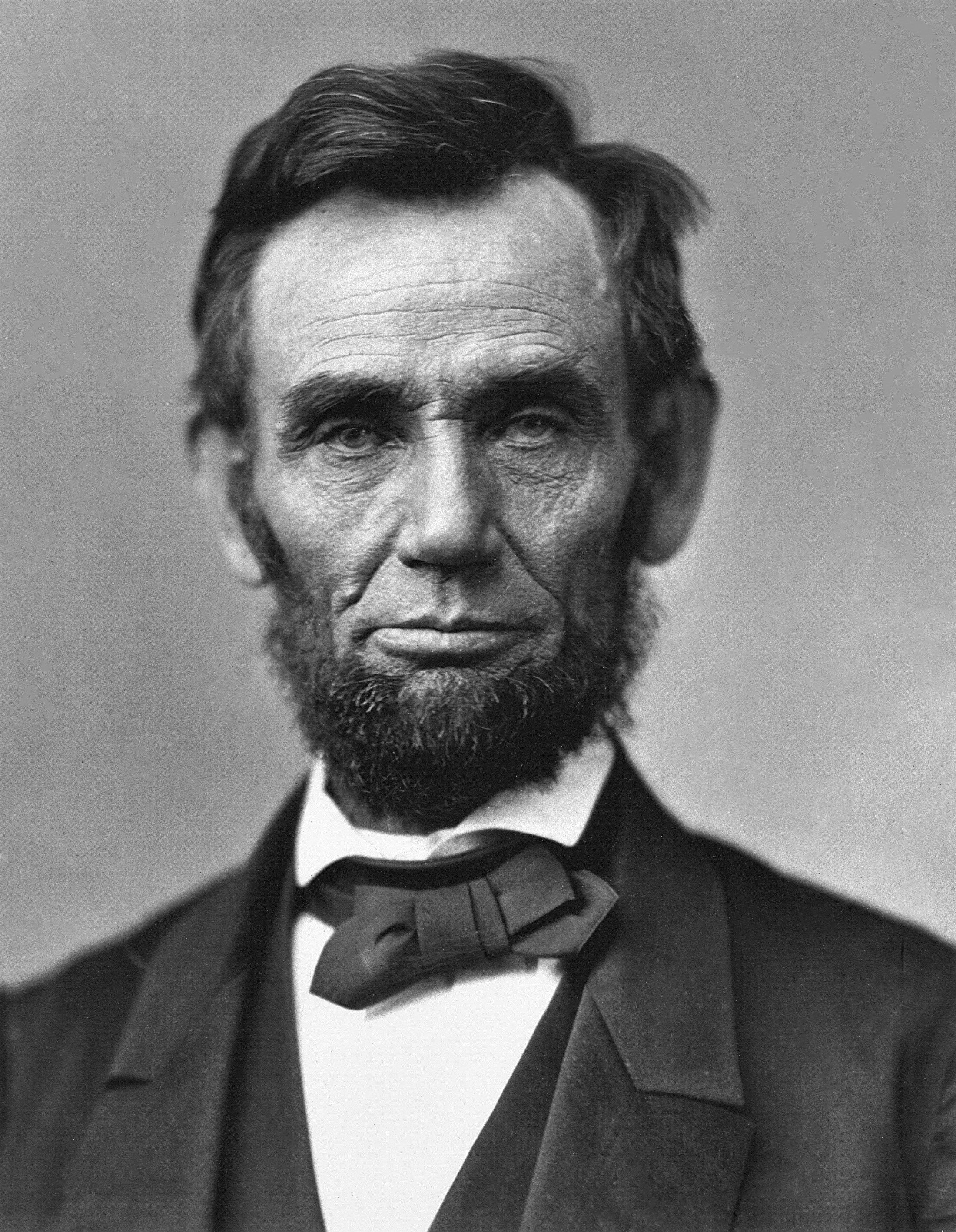
Abraham Lincoln - Wikipedia
Abraham Lincoln,(1809 -1865), Sixteenth President of the Unites States, leader of the Whig Party and co-founder the Republican Party, won the Civil War to save the Union (Courtesy of Wikipedia)

Adams understood the importance of seeing the world as “a community of principle” where win-win cooperation based upon the self-improvement of both parts and the whole would constantly bring renewal and creative vitality to diplomacy. It was a top-down systemic approach to policy that saw economics, security and political affairs interwoven into one unified system. This is an integrative way of thinking that has been sorely lost in the hyper theoretical, compartmentalized mode of zero-sum thinking dominant in today’s neo-liberal think tank complex.

It was for this reason, that Adams advocated the use of Hamiltonian national banking and large-scale infrastructure projects like the Erie Canal and railways throughout his years as Secretary of State and President. From this paradigm, if American interests would be extended across the continent or the world more broadly, it would not be through brute force, but rather by the uplifting of standards of living of all parties.

Over the years, we have seen small but powerful attempts to revive Adams’ overarching security doctrine.

We had seen it revived with President Ulysses Grant’s efforts to extend US industrial know-how to countries across the world during the 1870s. We saw it again with McKinley’s promotion of rail lines uniting the Americas in what was to become a new industrial renaissance for Latin America.

We saw it come alive again with FDR’s program for internationalizing the New Deal across China, India, Ibero America, the Middle East, Africa, and Russia.

Eisenhower made some noble moves towards this renewal by ending the Korean War and attempting his Crusade for Peace driven by US-Russian cooperation and advanced scientific investments into India, Iran, Afghanistan, Pakistan, and Latin America. Eisenhower’s many positive plans were sadly derailed by a growing parasite in the heart of the US deep state which he addressed in his famous “military industrial complex” speech of 1960.

Governor To Be

Franklin Delano Roosevelt (1882-1945), thirty-second President of the United states, only president to serve four terms, created the New Deal, formed strategic alliance with Russia and China. (Courtesy of thoughtco.com)

Kennedy’s efforts to end the Vietnam war, revive FDR’s New Deal spirit in the 1960s, while seeking entente with Russia was another noble effort to bring back Adams’ security doctrine, but his early death soon put an end to this orientation.

From 1963 to 2016, tiny piecemeal efforts to revive a sane security doctrine proved short-lived and were often undone by the more powerful pressures of unipolarist intrigue that sought nothing less than full Anglo-American hegemony in the form of a New World Order whose arrival was celebrated by the likes of Bush Sr and Kissinger in 1992.

Despite his many limitations, President Trump did make an honest endeavor to restore a sane security doctrine by focusing American interests on healing from 50+ years of self-inflicted atrophy under globalized outsourcing, militarism, and post-industrialism. Despite having to contend with an embarrassingly large and independent military-intelligence industrial complex that didn’t get less powerful after Kennedy’s murder, Trump announced the terms of his international outlook in April 2019 saying:

“Between Russia, China, and us, we’re all making hundreds of billions of dollars’ worth of weapons, including nuclear, which is ridiculous.… I think it’s much better if we all got together and didn’t make these weapons … those three countries I think can come together and stop the spending and spend on things that are more productive toward long-term peace.”

This call for a US-Russia-China cooperative policy ran in tandem with the first phase of the US-China Trade deal which went into effect in January 2020 guaranteeing $350 billion of US finished goods purchased by China. None other than George Soros himself suffered a public meltdown that month when he announced that the two greatest threats to his global Open Society were: 1) Trump’s USA and 2) Xi’s China.

US-VOTE-2020-DEMOCRATS-DEBATE-POLITICS
Joe Biden, 79 years old, forty sixth President of the United States, Will President Biden lead the US into war with Russia? (Courtesy of theverg.com

Of course, a pandemic derailed much of this momentum and the trade deal slowly broke apart. Despite these failures, the idea of returning the USA to an “American first” outlook by cleaning up its own internal messes, extracting CIA operations from the military, defunding regime change organizations like NED [National Endowment of Democracy] abroad and returning to a traditionally American policy of protective tariffs were all extremely important initiatives that Trump put into motion,  and set a precedent which must be capitalized upon by nationalist forces from all parties wishing to save their republic from an oncoming calamity.

One year into Biden’s “rules based international order”, the hope for stability and peaceful cooperation among the nations of the earth has been seriously undermined. Unlike Trump, who rightfully severed US cooperation with NATO, the current neo-con heavy administration has made absorbing Ukraine and other former Soviet States into NATO a high priority going so far as to assert that Russia’s invasion is immanent should NATO forces not protect “poor, peaceful Kiev.” No mention of Nazi-ridden Azov Battalions used by Nuland and the CIA to topple the former government in 2014 is ever mentioned of course.  8500 US troops have been told to be put on high alert and 2000 US troops have been deployed to Poland and Germany. Over 19 NATO war games have been planned for 2022 which will start this month, and even China is concerned that Biden’s “NATO-of-the-Pacific” agenda is seeking to enflame Taiwanese independence and absorb the rebellious island into the US military industrial complex.

When looking at Russian “red lines” from this standpoint and holding in mind the new form of a Eurasian Manifest Destiny emerging with Putin’s Far Eastern Vision, Polar Silk Road and China’s BRI, it is a rich irony that the spirit of John Quincy Adams’ security doctrine is alive in the world. Just not in the USA.

Matthew Ehret is the Editor-in-Chief of the Canadian Patriot Review , and Senior Fellow at the American University in Moscow. He is author of the ‘Untold History of Canada’ book series and Clash of the Two Americas. In 2019 he co-founded the Montreal-based Rising Tide Foundation 

Read my earlier posts:

U.S. Geopolitics Exposes Itself in CFR report on China’s Belt and Road-Will Africa benefit?

What’s Wrong with U.S. Policy for Ethiopia and Africa?

Lawrence Freeman is a Political-Economic Analyst for Africa, who has been involved in economic development policies for Africa for over 30 years. He is the creator of the blog: lawrencefreemanafricaandtheworld.com. Mr. Freeman’s stated personal mission is; to eliminate poverty and hunger in Africa by applying the scientific economic principles of Alexander Hamilton.

U.S. Diplomats Collaborate With TPLF to Plot Removal of PM Abiy From Governing Ethiopia

November 26, 2021

It is instructive to read Jeff Pearce’s article; Ethiopia: Western Diplomats Meet in Secret to Decide How to Help the TPLF , based on the secret zoom meeting with retired Western diplomats, including a former U.S. offical, and Berhane Gebre-Christos, leader of the Tigray People’s Liberation Front-TPLF. Their secret discussion was on how to remove Prime Minister Abiy Ahmed from office . Watch the video of the zoom meeting above.

I have known for a long time that the certain Western forces have wanted to weaken Ethiopia’s duly elected Prime Minister, Abiy Ahmed. Now we have the proof. Open collaboration of Western diplomats with the TPLF, labelled a terrorist group by the Ethiopian government, to bring down Prime Minister Abiy. These used up diplomats want the TPLF to succeed in militarily defeating Ethiopia’s army and overthrowing the government, which was elected by over 40 million Ethiopians. This is regime change! This is a real scandal, given the stated position of neutrality by the U.S government. Shame on the Biden administration.

There are also TPLF sympathizers currently in the U.S. government, who are directing President Joe Biden to weaken the sovereign nation of Ethiopia.

As an American, with exceptional knowledge of Africa and Ethiopia, I will continue to fight to prevent President Biden from destroying the Horn of Africa, like his Democratic predecessor, President Obama, did to Libya and the Sahel, ten years ago.

Below are excerpts from Pearce’s article.

The West’s Horn of Africa experts have been meeting with a TPLF leader and TPLF/OLF supporters in secret, even as its governments claim to be impartial — TPLF’s Berhane Gebre-Christos speaks as TPLF member, proposed head of “transitional government.”

Donald Yamamoto, recently the U.S. Ambassador to Somalia who just retired this year, to TPLF official Berhane Gebre-Christos:

“Abiy is not listening… Obasanjo has not been extraordinary helpful or very active, and so are there any other opportunities that you see?”

Vicki Huddleston, former U.S. Deputy Assistant Secretary of Defense for African Affairs and US Assistant Secretary of State for Africa, speaking to Berhane Gebre-Christos:

“I couldn’t agree more that you know, Abiy should step down, there should be an all-inclusive transition government.”

Former ambassadors and current diplomats for the United States, Britain and EU had a Zoom meeting this past Sunday with an official for the TPLF in what amounts to a green light from the West for the terrorist group’s attempts to overthrow the democratically elected Ethiopian government. And there’s evidence to prove it: a phone-cam video of the two-hour meeting.

“I hope that you’ll have military success fairly soon, because it seems as if the situation is only becoming more drastic,” said Vicki Huddleston, who was Chargé d’Affairs ad interim in Ethiopia during years the TPLF were in power.

France’s retired diplomat and writer Stéphane Gompertz openly speculated on the potential for Abiy to be forced from power. “Even if Abiy sticks to his guns, which unfortunately he seems to be doing, you either hope that people around him either in government or in the military realize that this is going nowhere and might force him to, well, accept the cessation of hostilities or force him to step down?”

The Western powers — Britain, the EU and especially the United States — have been posturing for months that they have not taken sides in the conflict and are pushing negotiations only in the interests of peace. But the Zoom talk rips away the façade, revealing a chummy circle of foreign policy elite, both retired and still active who mostly know each other and are in sympathy with TPLF objectives. They include Donald Yamamoto, one of the U.S. government’s most senior Africa experts who just retired this year as the American ambassador to Somalia, and Spain’s diplomat Carmen de la Peña.

Read the complete article: Ethiopia: Western Diplomats Meet in Secret to Decide How to Help the TPLF

Read my earlier posts:

Will President Biden’s Sanctions vs Ethiopia Cause Suffering for Hundreds of Millions of Africans

Biden’s Sanctions Could Plague Ethiopia and Africa for Generations

 Lawrence Freeman is a Political-Economic Analyst for Africa, who has been involved in economic development policies for Africa for over 30 years. He is the creator of the blog: lawrencefreemanafricaandtheworld.com. Mr. Freeman’s stated personal mission is; to eliminate poverty and hunger in Africa by applying the scientific economic principles of Alexander Hamilton.

Biden Government Must Replace Regime Change for Ethiopia With Policy for Economic Development

November 22, 2021

In an interview with Addis Media Network, on November 18, 2021, I discuss how we must fight against efforts for regime change in Ethiopia, and instead promote a policy for economic development. I identify that the so called mainstream media are not objective truth seekers, but part of the propaganda arm of the political-economic elite–an oligarchy. The West refuses to respect the sovereignty of Ethiopia and the elected government of Prime Minister Abiy Ahmed. President Joe Biden is pursuing a dangerous policy of economic and political warfare against Ethiopia and its people. The enemies of Ethiopia will use humanitarian concerns as an excuse to potentially deploy military forces under the pretext of protection the Ethiopian people from their own government. This doctrine, known as R2P-the responsibility to protect- was created by George Soros and Tony Blair. Samantha Power and others in the Obama administration used R2P to justify the overthrow of President Kaddafi and the destruction of Libya.

Ethiopia must be allowed to pursue its commitment to development and the elimination of poverty. We need a united Ethiopia, with a single conception of Ethiopian citizenry, not one based on ethnicity.  Unfortunately, U.S. President, Joe Biden, does not understand the true interests of the continent, and is allowing his administration to be used against the people of Africa and Ethiopia. Ethiopian diaspora should be united in defeating regime and allowing Ethiopia to once again lead Africa along the path of economic growth.   

 Lawrence Freeman is a Political-Economic Analyst for Africa, who has been involved in economic development policies for Africa for over 30 years. He is the creator of the blog: lawrencefreemanafricaandtheworld.com. Mr. Freeman’s stated personal mission is; to eliminate poverty and hunger in Africa by applying the scientific economic principles of Alexander Hamilton.

Why is the Nation State of Ethiopia Under Attack? Is Regime Change on the Agenda?

September 6, 2021

Please watch the above interview from August 24, 2021 with with myself, and Deacon Yoseph Tafari, Chairman of the Ethiopian American Civic Council, on ETV’s weekly show, “Addis Dialogue.” We discuss the the current conflict in Tigray and its impact on the the existence of the nation-state of Ethiopia from a strategic perspective.

Our discussion includes answering the following questions: What are the reasons for the conflict? What has been the role of the United States since the November 4, 2020 attack by the TPLF on the Ethiopian National Defense Force in Mekele? Who are the outside interests that are undermining the government of Prime Minister Abiy Ahmed and why are they contemplating “regime change?” What is the strategic importance of Ethiopia to the Horn of Africa? Why is Ethiopia’s development model important to Africa? Why is the GERD being attacked when it will generate electricity for economic growth in the Horn of Africa? Why U.S. President Joe Biden, must immediately reverse current US policy and support the government of Ethiopia?

Lawrence Freeman is a Political-Economic Analyst for Africa, who has been involved in economic development policies for Africa for over 30 years. He is the creator of the blog: lawrencefreemanafricaandtheworld.com. Mr. Freeman’s stated personal mission is; to eliminate poverty and hunger in Africa by applying the scientific economic principles of Alexander Hamilton